Saving your voice: Don’t yell unless you REALLY need to

Kids are noisy. I feel a little badly for my neighbors right now because my kid is only 3 months old and she’s already, on an average day, louder than me. Because of their noisiness, it can be easy to feel the need to compete with them on a loudness scale.

noiseometer


But just ask any parent who finds themselves yelling more than they’d like and they’ll tell you that it isn’t all it’s cracked up to be.

Drawbacks of yelling:

#1 You have to get louder and louder to get your kids’ attention. If telling turns into yelling, it becomes background noise for kids.

#2 It gives you a headache.

#3 It makes you feel badly about how you’re communicating with your kids.

#4 It’s not that effective. They don’t even seem to listen to yelling all the time, so how do you amp it up after that?

#5 Your kids learn to yell back.

#6 THEY DON’T KNOW WHEN YOUR YELLING MEANS THAT THERE’S AN EMERGENCY!

This last one is the most important to me because I want my yell to MEAN SOMETHING! If I do it all the time, it’ll just be any other yell when it comes to a more serious situation. But I want to be clear that when I see my kid chasing their ball toward the street and I YELL, “STOP!!!”, she’ll stop. I don’t ever want to run the risk of her tuning me out when it’s uber important that she hear me simply because she’s heard me yell one too many times. I’ll be the mom who yelled wolf…and everything else I ever wanted to say. She will never believe me when the wolf actually comes around. Gobble gobble.

While all of the reasons to keep your voice down (including the shushing of the librarian) are completely valid as well, I want to be safe rather than sorry and save my raised voice for a time when it REALLY IS NEEDED!

Get One, Give One

Welcome to 2 days before Christmas! For many of us, that means that our vacations have begun (or are about to)! Hooray! It also means that many parents are getting close to the one huge day of gluttony that is December 25. It means a rest from requests: “Can I have a puppy for Christmas?”. It means plenty of gleeful shouts and some disappointment when they discover that the dog is out of the question. The end of the year brings many other thoughts for parents as well. Charitable giving increases by about 1200% (caveat, I made up that number) in the last few days of the year. We get our giving in before tax time right after we give so much to our kids. Let’s introduce the giving to them as well!

There’s plenty of talk about gift giving from kids to friends and family, but why not also introduce the idea of gift giving to strangers?

Get one, give one.

My daughter is just 2 months old and already some lovely Christmas presents have been bestowed upon her. My husband and I are not getting her anything this year, but once she’s a couple of years older, we fully plan on implementing the Get One, Give One idea. Since Christmas tends to be an orgy of gifts and since kids seem to be the focus of this orgy more than adults, we are going to introduce the idea of giving older toys and goodies away to other kids. When she receives a present, she will need to choose something from her own stash to be given away. This way we’ll be stressing the idea of donation and reuse as well as keeping our house from getting inundated with toys. Win-win! An eye for an eye! A gift for a gift!

As I’ve said before, giving the gift of gratitude and the gift of giving (!) are really the best parts of the holiday season. As we grow we tend to learn this, but our children often forget or are not taught what a joy giving can be. If it’s a regular part of their holiday and growing experience, maybe they’ll learn to appreciate it more quickly and share in even more joy during the holidays.

Maybe you can start with a smaller ratio this year. You could talk about giving 5 things away or one thing for every year of age of your child. It doesn’t matter the number. As with our charitable giving, we give what we can. So should it be for our kids. Let them give what they can and help make the holidays happy for your family and for other families as well!

Happy Holidays!


Image

Invisible Fences

I might like the Dog Whisperer a little too much. We just recently added the National Geographic channel back into our TV lineup and I’ve seen a few episodes that have reacquainted me with Cesar’s philosophies. In my opinion, so much of what I hear from him about dogs applies to kids too. He certainly talks about the importance of training the owners, since so many of the “problems” in the dogs are influenced by the energies and habits of their owners. With parents and kids it is much the same way. If you are anxious and stressed, then there’s a good chance that that’s the energy you’ll be giving your child. If every bump or cry or want is met with immediate & nervous attention, then not only will your child learn that that is the proper reaction to bumps and cries and wants, they’ll also start to learn that gasps and anxiety are normal ways to react to most things. Similarly, if you tend to be a calm parent, then chances are better (though not certain) that you’ll pass on some calm to your kids.

Just as dog owners and parents teach habits to their pets and kids, they also are responsible for setting firm boundaries. How many episodes have I seen where owners are afraid to take their dogs on walks because their pups are too aggressive toward passers-by and other dogs? Or that families have to segregate their dogs from their children because the dogs just can’t be trusted around the kids? Changing your life when a pet or a child comes into it is a natural thing, but changing it so much that it’s grossly inconvenient for you and your family is quite another. What these pet owners were lacking was conviction and boundary-setting.
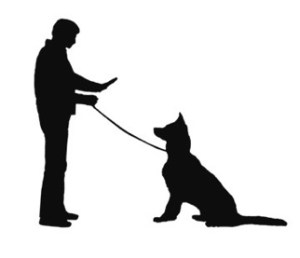
dog training and obedience_r

Boundaries: Invisible Fences

You’re reading a book to your son. Your daughter comes up and tries to take it from you. You redirect her and invite her to listen along, but tell her that she can’t have the book right now. She tries again, this time taking it from your hands. This little dance of take and get back goes on for a few minutes before you give up, apologize to your son and offer him a different book to read. No boundary.

You are checking your email on your iPhone. Your son comes up and asks to play a game on it. You tell him that you’re busy with it right now and that he can’t have it. He asks again and again and again and again. Eventually you give it to him or you put it away before you’ve had a chance to respond to that email. No boundary.

When we let kids get what they want after we’ve told them ‘No,’ we are reinforcing the fact that our boundaries are completely for show. The line in the sand might be there, but you can walk on either side of it. In the same vein, when we avoid situations where boundaries are needed, we are complicit in neglecting the teaching of them (like putting away your iPhone so that neither you nor your son can use it- no fair to you!).

How do we solve this problem then? Let’s return to the iPhone…

#1 Do you have rules about iPhone use?

Are they even allowed to play on it? If they are, when are they? Only when you don’t need it? Only when you’re out at a restaurant? Only once their homework is done? What are the boundaries that you’ve established?

#2 If they are sometimes allowed to use it, but just not right now…

They need to be warned that if they continue to nag you for it, they will not be allowed to use it when you’re done with it at all. That iPhone belongs to you, gosh darn it!! Don’t let them dictate when and if you can use it. You tell them when and if they can use it.

#3 If they are never allowed to use it…

Try not to be showy about it being out and around, but you don’t have to keep it hidden from them when you’d like to use it. That shows them that it really does belong to you and isn’t just something that you have to sneak or hide from them. And also that you set the rules regarding its use. No meant no and continues to mean no. But no doesn’t mean no for mom since it’s hers. Don’t let them trick you with that, “But you said couldn’t use it, so why can you?” stuff. It belongs to me, that’s why I can use it.

With younger kids (toddlers and pre-schoolers), simply moving them away from things you’d like them not to touch or moving the things away from them is the way to go. That doesn’t mean that you should keep a breakable vase out just so you can use it as a teaching tool. But if you’d like them not to drool on or mangle a certain book, don’t always put the book on a high shelf. Keep it down on the floor with you and simply move it away from them when they get to it. Tell them that that’s not for them to touch, show them what they can touch, and let the book be. Repeat, repeat, repeat until they eventually get what you mean.

And just like that you have built some invisible fences that will help you keep the boundaries in your house in place.
You don’t know what you’ve got ’til it’s gone

I have a preemptive apology to make to the newest member of our family. Prior to this, I have been writing about hypothetical kids or other people’s kids, but now, I can write about my own kid. She’s not even 4 weeks old & I’m already taking advantage of her. Forgive me love.

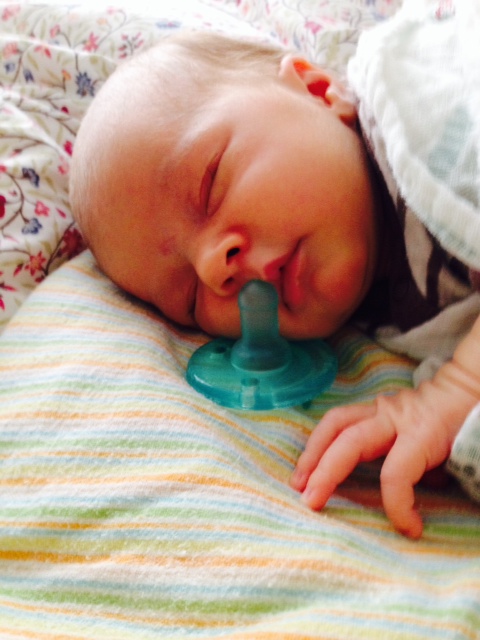
And I begin where we are. She is napping right now, which is a perfect thing for a baby to do. But as many parents know, sleep + babies can also be a trial. There are a plethora of books written to help parents shape their children’s sleep (The Sleep Lady, Dr. Sears, No-Cry Sleep Solution, Dr. Ferber & many more). My little one sleeps about as much or more than my cat currently. And while she generally does ok on her own, it seems that if we miss the window of opportunity, or she gets over-tired, then her ability to go to sleep and stay asleep is lessened.

My husband and I have subscribed to our own set of sleep standards as outlined by Dr. Harvey Karp in The Happiest Baby on the Block. We swaddle our daughter, shush her, have her suck on a pacifier, put her on her side and rock her. According to Dr. Karp, she’s in her 4th trimester right now and would prefer to be back inside my uterus, so we work to recreate that snuggly, noisy atmosphere to help her feel more at home. I’m down with all of this mostly because it seems to work. But I will admit to feeling a little trepidatious about eventually weaning her off of these sleep helpers.

For instance, I’ve noticed that the more aids we use for her, the more she notices their absence when they go away. What does that mean? Well, if she is having trouble calming down, but is clearly tired, then we tend to pull out all the stops. Turn on the shushing app, pop the pacifier in, rock the cradle! These things tend to calm her down and help her eventually transition into sleep. The problem comes when the pacifier falls out or the rocking stops or the timer runs out on the shusher. When she’s disquieted from the get-go, she’s much more likely to continue to get upset if something goes missing. This is not true if she goes to sleep without this help. She only realizes what she’s got when it’s gone. On the other hand, if she falls asleep on her own without the white noise and without the soothie, then she sleeps better, longer and deeper. There’s less to go wrong, so less upsets her even while she sleeps.

So while the soothing sounds of the ocean help her get to sleep, they don’t seem to help her stay asleep most of the time. The same with the pacifier. It only helps until it hurts by falling out. I’m not swearing these helpers off by any means, but I do want to encourage sleep without help as much as I can since it simply seems to be more restful for her. And I do know that sleep begets sleep. If she’s not getting enough during the day, then she won’t get enough at night and all of us will need some soothing then.

Zzzzzzzzzzzzzzzzzzzzzzzzz

Nora zzzzs

Here’s looking at you kid

Eye contact. So useful. So powerful. So valued in our society. When people aren’t good at giving us eye contact, we assume there’s “something wrong” with them. We teach kids with social difficulties from the very beginning that eye contact is important. When emphasizing manners, looking directly at whoever they’re speaking to is underlined. Babies love it. We all love it. It makes us feel heard and indicates that we hear. It can express love, fear, disappointment, hope and so much more. And just like with every other powerful entity, we can use it for specific purposes (hopefully only using our “power” for good).

“Time to go to sleep,” you say. You’re watching your daughter intently for signs of fatigue and any indication that she’s not going to put up a fight, since it is, rightly, bedtime. She looks back at you with her eyes wide open, smiling. You gaze at each other for a little while, practically having a starting contest to see who will be the first to blink. You’re tired. You’d like her to be tired too. Sigh.

My first suggestion is that you use your eye contact to convey a message about this time of day.

#1 If you have a young child who has a bottle before they go to sleep, don’t stare at them while they eat. Keep your gaze soft and sometimes close your eyes. Looking into someone else’s eyes lets them know that they have an audience. It doesn’t necessarily mean that they’ll put on a show for you, but they’re more likely to try if they think you’re watching them.

#2 If you’re reading them a story in bed, lie down on the bed next to them. Don’t face them. Your eyes are paying attention to the thing that they should be paying attention to: the book.

#3  If you’re singing them a song or soothing them with some pats while they’re laying down, don’t look at their face so that they can see your eyes. I tend to look through my eyelashes a lot or simply put my head down on my arm to keep from looking at them (coincidentally doing a good impression of sleeping, which is what I’d like them to do).

“Mom, I need help with my homework,” you hear from the kitchen table. Another great way to use your thoughtful eye contact. When I’m asked to help with something school related, I often find that they’d like to shift a little bit of the responsibility to me. “Is that right?” Or they watch me to see if they can glean any information from my face about how they’re doing. “It’s this one…no, wait, this one?” And all of a sudden we’re lurching from guess to guess and getting it correct (quickly) becomes the focus instead of knowing how to do it.

How can eye contact be used in this scenario? Simply, I say unto you.

#1 If your child is asking for help on a problem and they want you to look at it or read it to them or take the reigns, don’t. Just look at the paper or the problem or the book. Sometimes you can read it aloud, but don’t always do so and then jump into an explanation of the problem. Just look at it. Act like you’re trying to figure it out (which happens more often than we’d like to admit). Keep looking at it. Look up at your kid for a second. Make a slightly questioning move with your eyebrows and then look back down. Hmmmmm….. The idea behind this is that you’d still like them to be in charge of their own homework. If you ask them a question about the homework and then watch them to wait for an answer…all of a sudden, you’re the one with the answers. You’re the one who has to be happy with the response. Not them.

#2 Once you’ve started working on whatever the “problem” is, keep looking down at it. You can encourage side by side concentration where you both work individually. That way, you’re still modeling that only by studying the problem or beginning to think about it can you ever reach an answer. The answer should not be found in your face. If that’s where they’re looking to gauge their progress, then they’re using their interpersonal skills to read your reactions, not their ______________ (math, spelling, reasoning) skills to come to their own conclusions. Don’t give them too much to look at- mostly meaning your eyes.

Sound doable?

You can use eye contact or the removal of it for many different situations without having to say much if anything.

“Stop doing that” say your eyes

Looking away to indicate that you’re ignoring a behavior that you see

Smiling at your kid

Winking

Surprise!

It’s quiet time

And so many more…

Here’s looking at you kid!

bogie